Plant status read through data
Temperature, humidity, soil, EC, pH, battery and sensor status can be followed inside the app, together with useful history intervals.
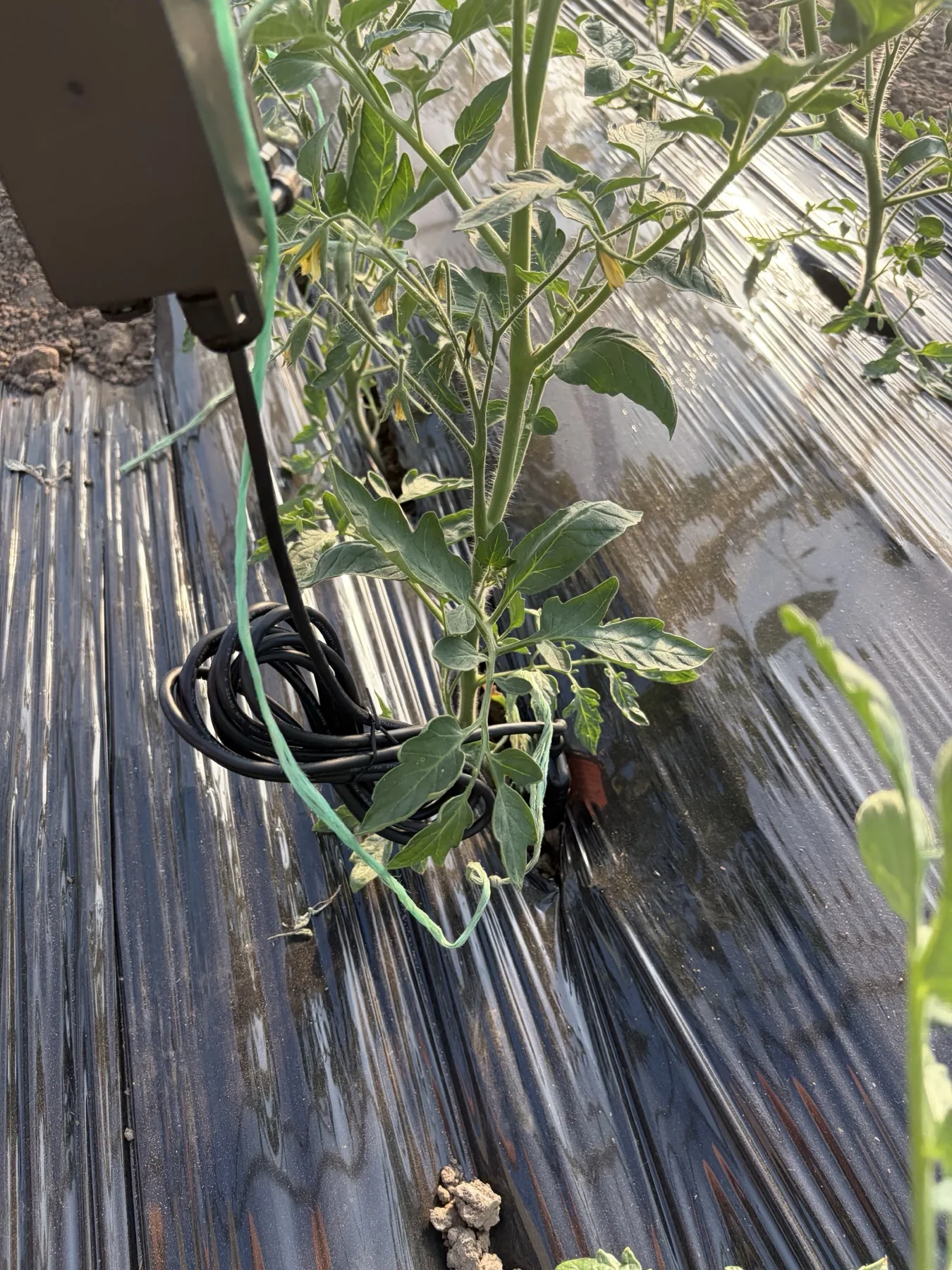
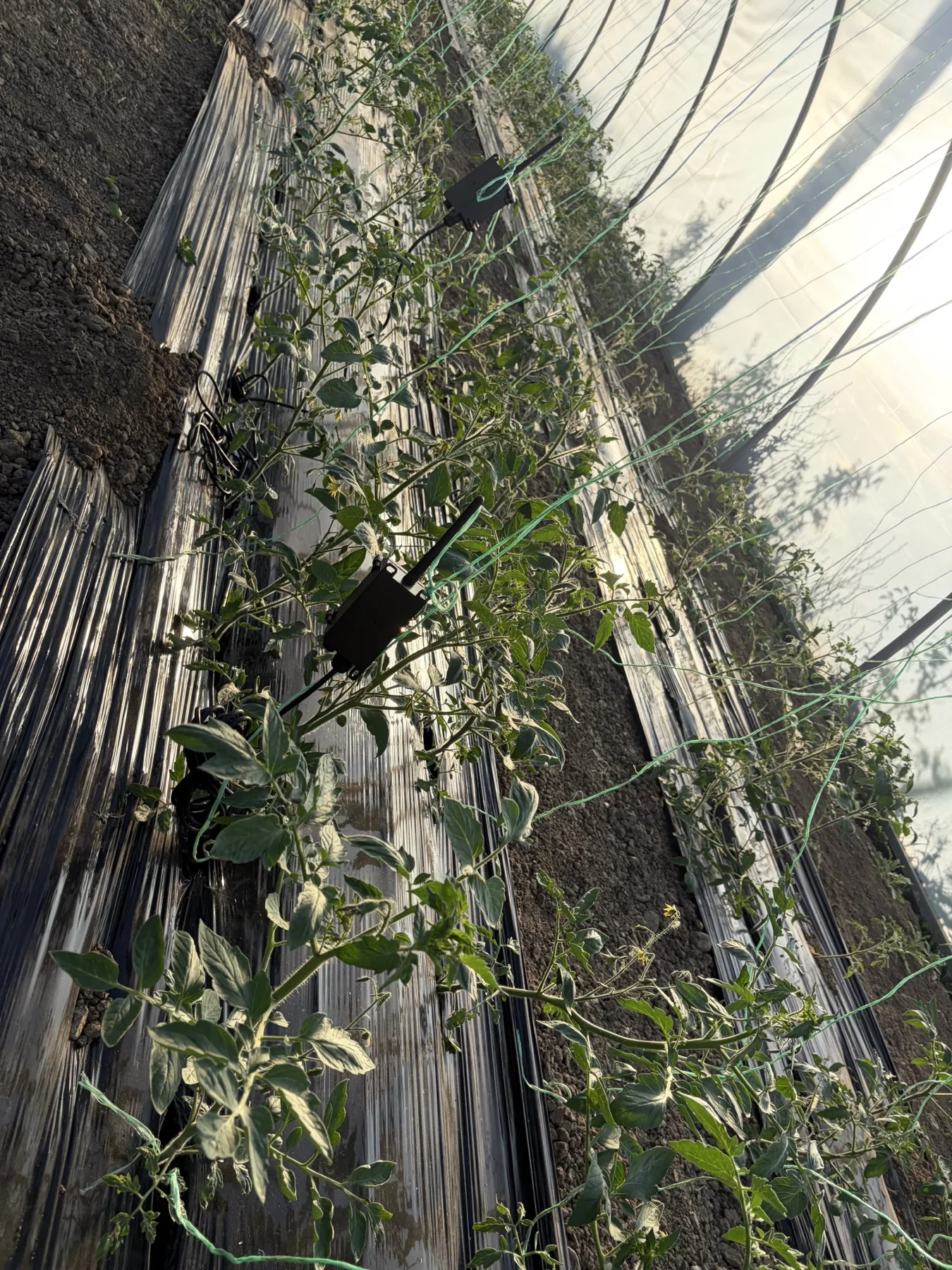
This first project shows GrowGuard used directly inside a vegetable tunnel, where local readings matter more than a general weather average. Sensors were installed among tomato rows to help the growing team follow crop status, soil conditions, irrigation, fertilization and disease-risk context from one application.
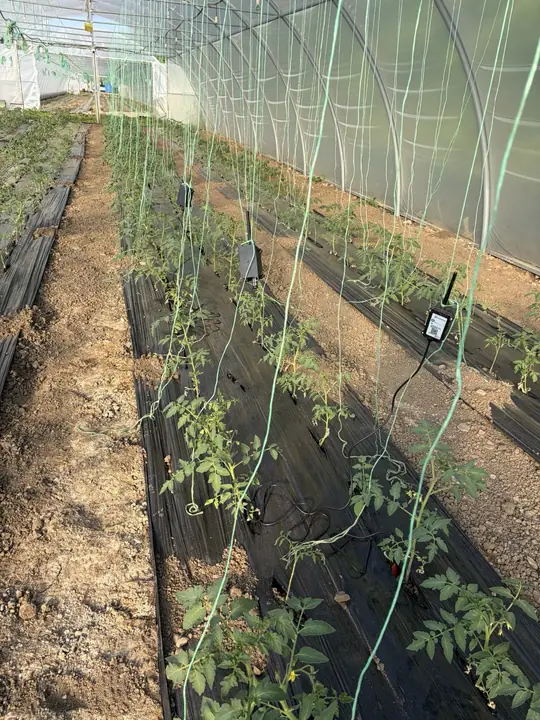
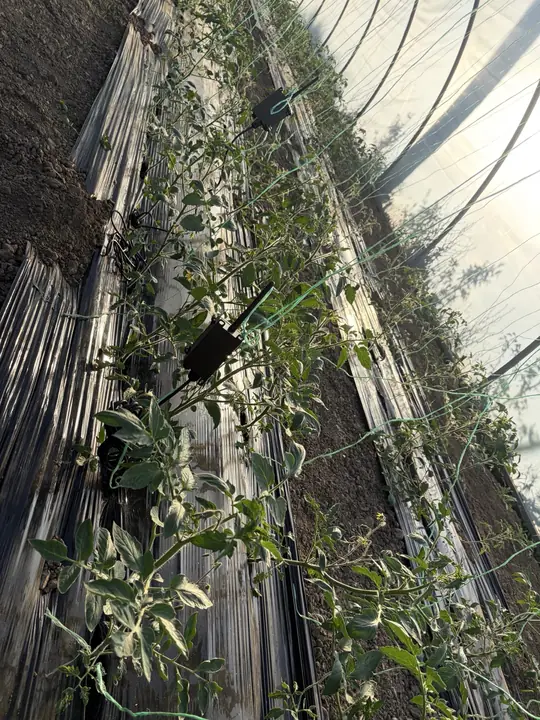
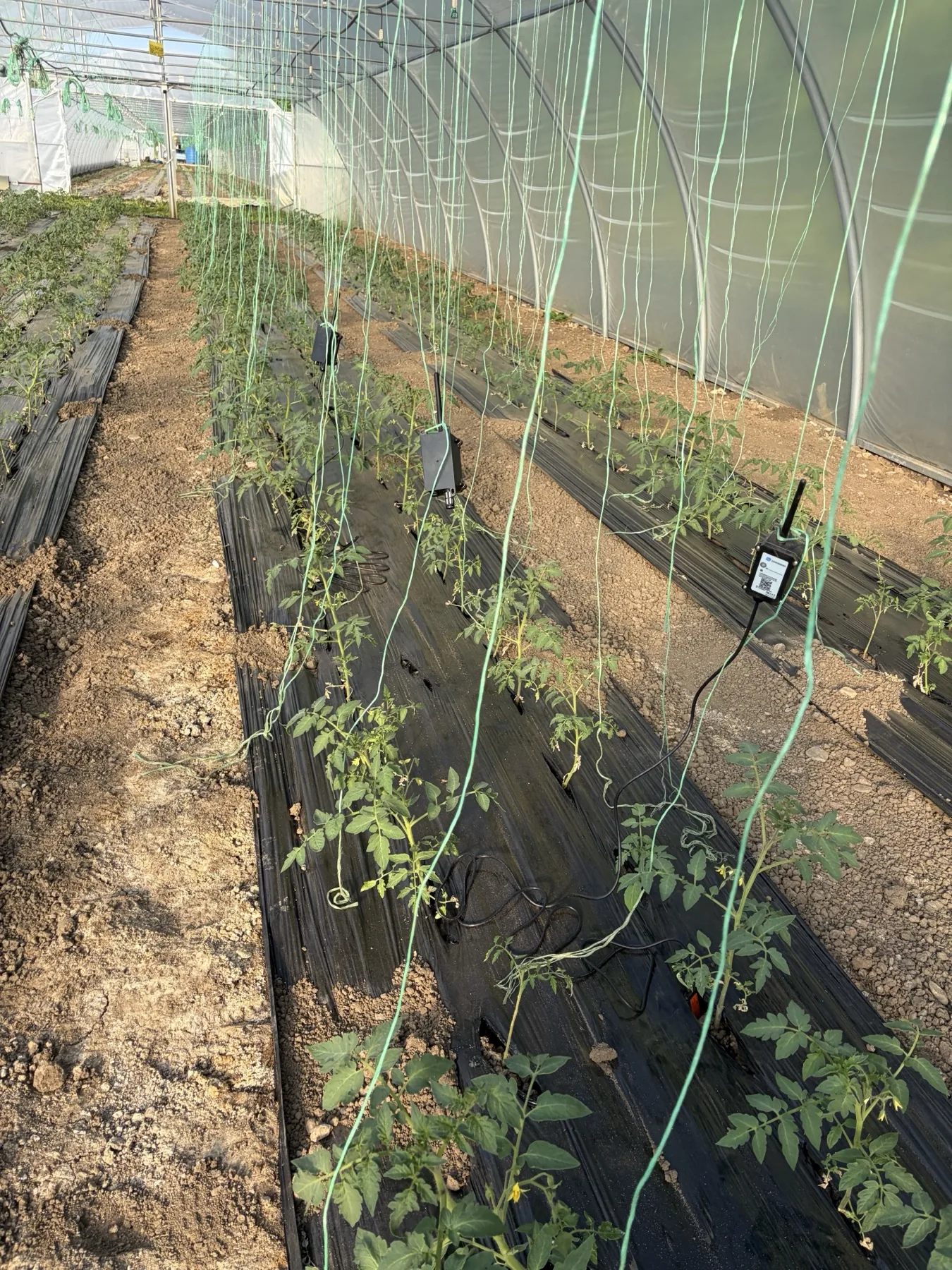
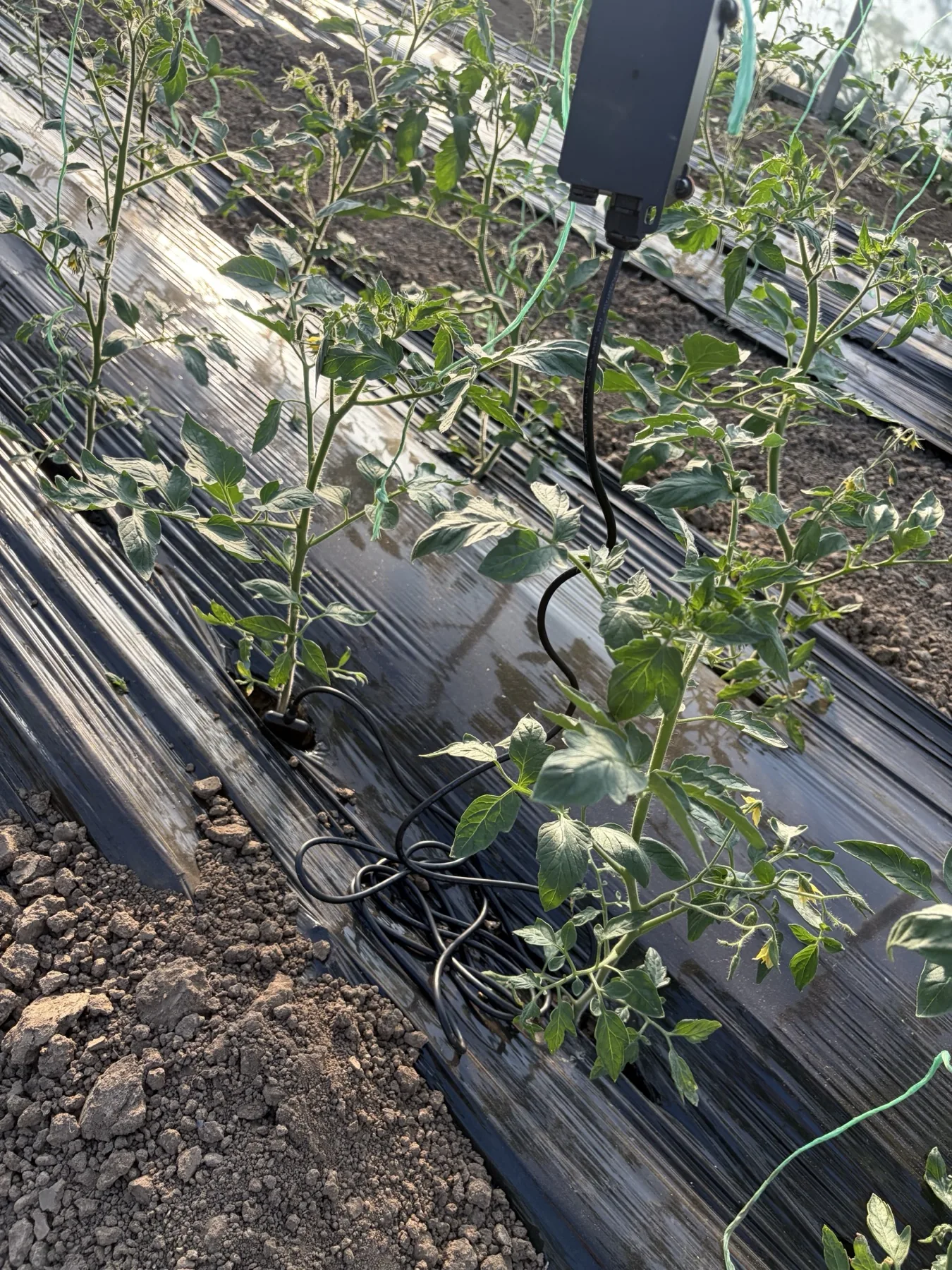
In an organic vegetable farm, decisions need to be precise. Too much water can create root-zone stress and disease pressure, too little water can slow growth, and fertilization needs to be read together with crop stage and soil behavior. GrowGuard helped the team keep those signals in one operational view, with sensors placed inside the crop and readings available from the app.
In a tomato tunnel, differences between rows, warmer zones, shaded areas or places where water remains longer in the soil can change the decision. Sensor placement matters because GrowGuard can connect readings to the real place in the crop, then place them next to history, forecast, alerts and reports.
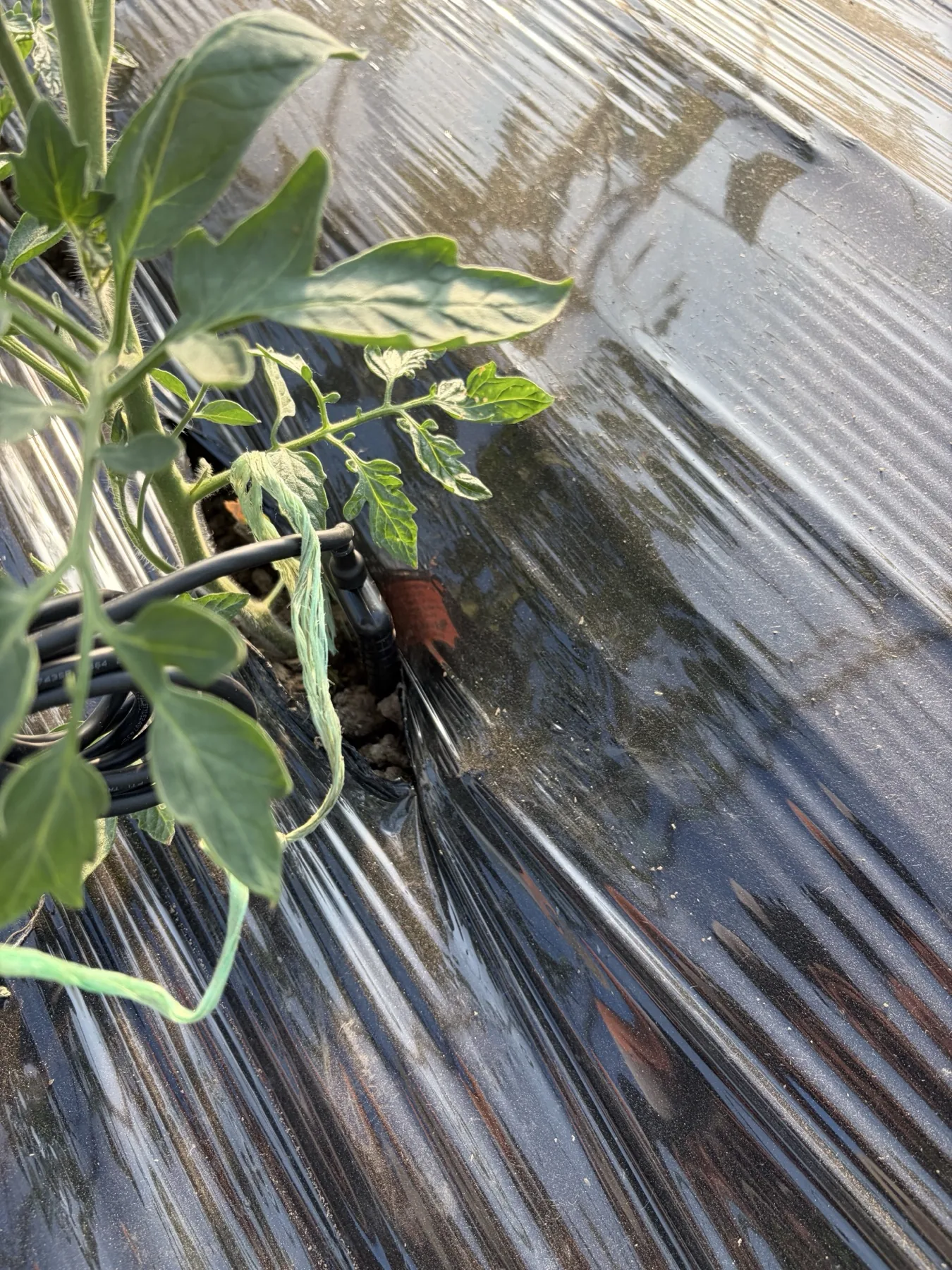
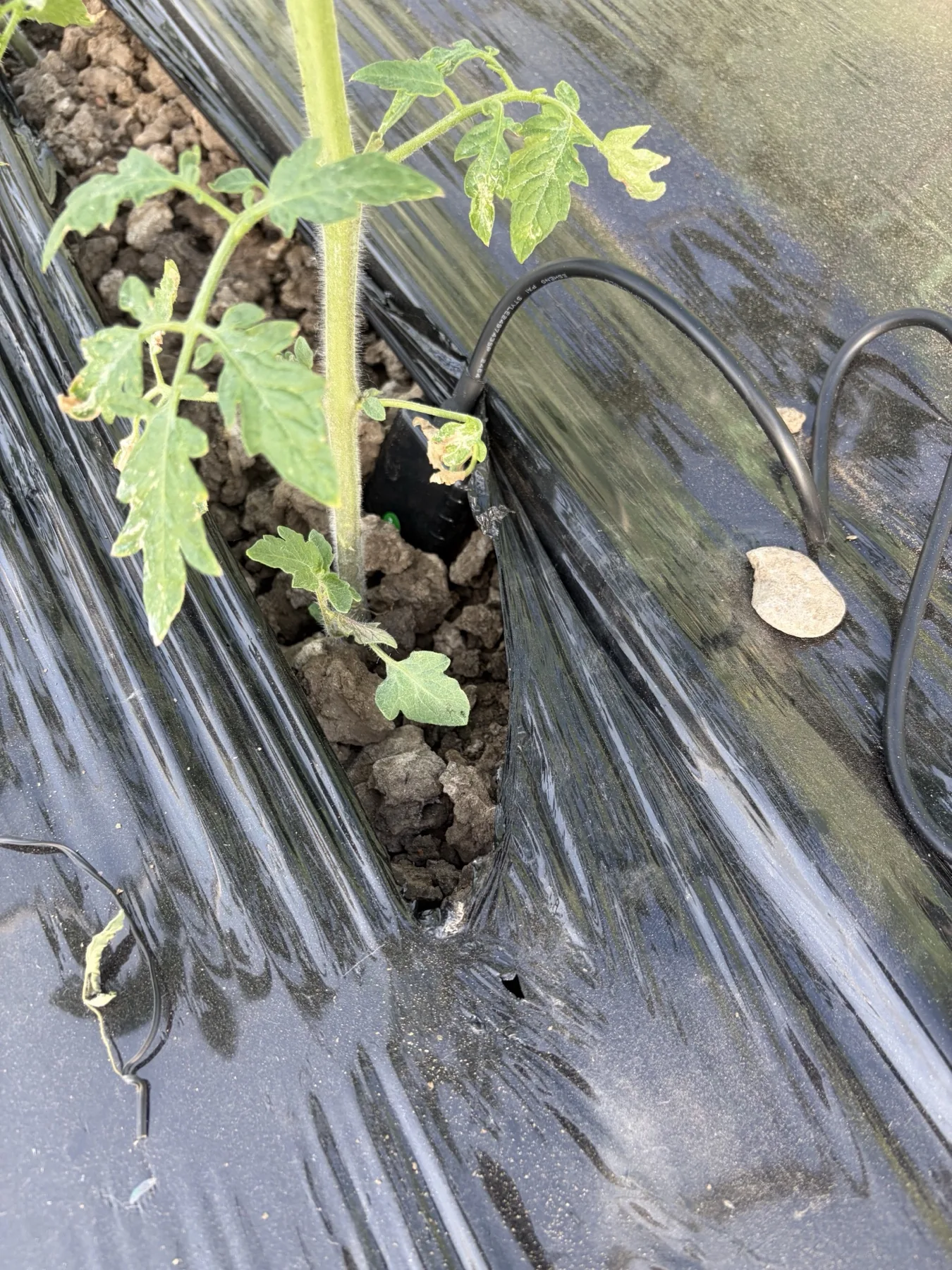
This project used 16 Dragino LoRaWAN measurement points: 6 temperature and humidity sensors for the greenhouse microclimate, 5 soil pH sensors for soil reaction and 5 soil EC sensors for conductivity and fertilization control. The combination made it possible to monitor air, root-zone behavior and nutrition-related parameters at the same time, not just a single isolated temperature value.
Temperature, humidity, soil, EC, pH, battery and sensor status can be followed inside the app, together with useful history intervals.
Local readings help verify how water remains around the roots and where the crop may be under excess or deficit.
When sensors transmit EC and pH, GrowGuard can highlight local imbalances and support the conversation around active nutrition.
Forecast helps interpret cold nights, heat, persistent humidity, condensation and useful ventilation windows.
The latest GrowGuard update extends the predictive phytosanitary engine from one crop profile to multi-branch monitoring: floriculture, vegetable crops, fruit growing, viticulture, field crops and urban trees. For vegetable crops, the engine can track favorable windows for late blight/Phytophthora, Botrytis, powdery mildew, tomato early blight, local root stress and other useful signals.
These alerts are conservative decision-support signals. They do not prescribe treatments, doses or withholding periods; the user validates symptoms, crop stage, local guidance and product labels.
The photos show sensor placement near plants and the root zone, where local measurements can influence daily decisions.
The second GrowGuard project was deployed in a floriculture operation in Aiud, Alba County, where ornamental plants, hanging baskets and production areas need stable microclimate conditions. Ten MQTT sensors were connected to monitor flower greenhouses, helping the team follow temperature, humidity, zone differences, behavior after irrigation and the risk created by persistent humidity.
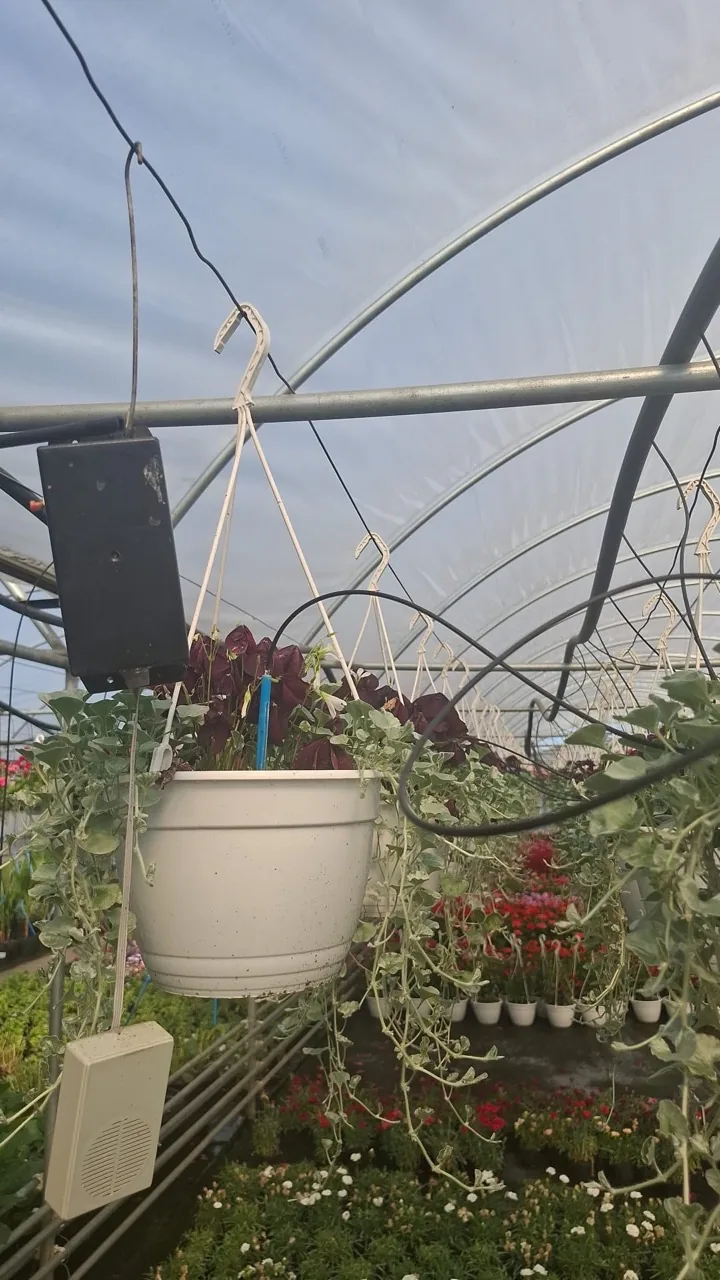
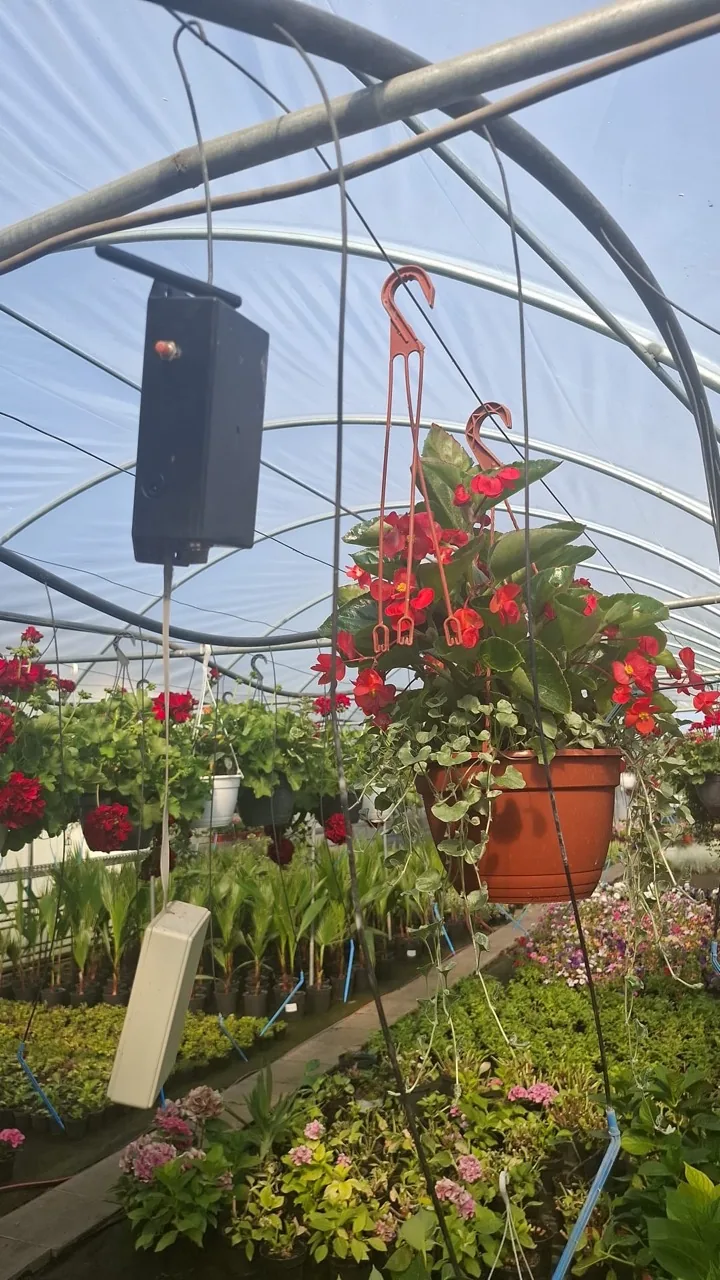
In flower greenhouses, losses do not only come from lack of water or major equipment failures. Sometimes the issue starts with one wetter zone, a temperature difference between greenhouse ends, delayed ventilation or a long interval where the air remains too humid. GrowGuard helped the Aiud team see these differences by zone, instead of relying on one general reading.
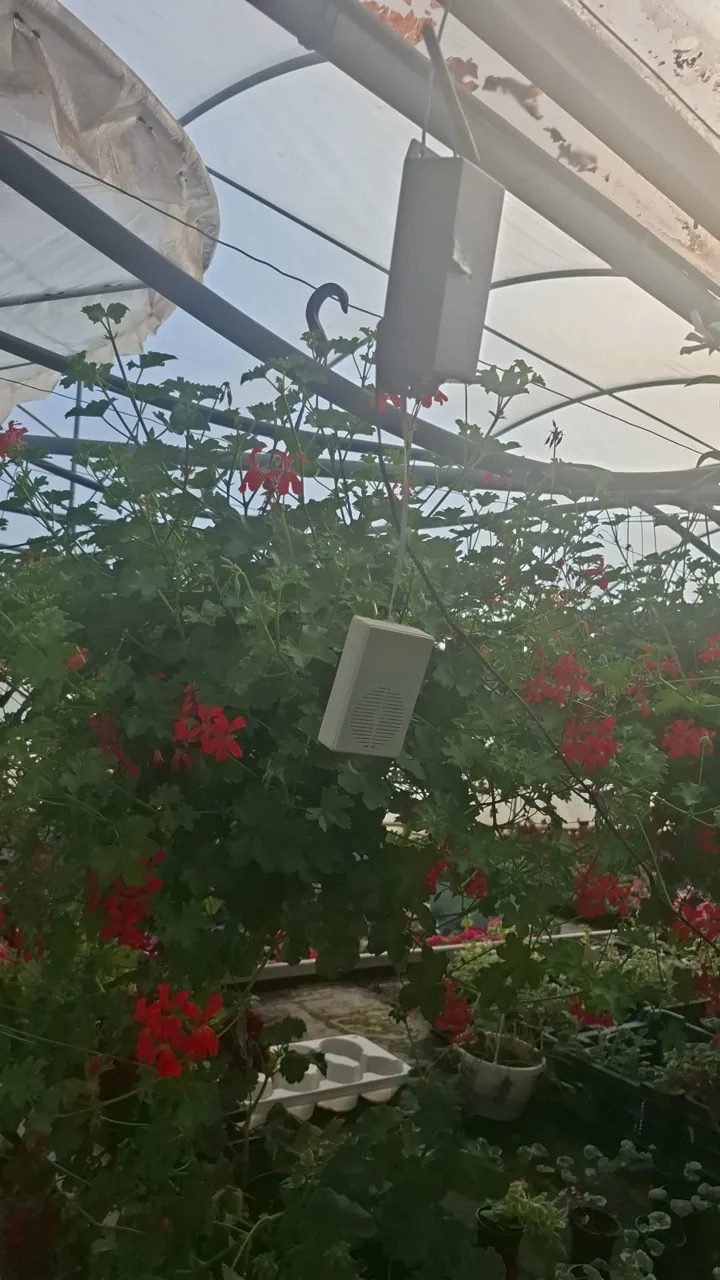
The ten MQTT sensors were placed in relevant greenhouse points: near hanging baskets, in areas with different air movement and close to plants that react quickly to microclimate changes. The sensors published data through MQTT and GrowGuard turned those readings into history, comparisons and alerts when values moved outside the target intervals for floriculture.
For daily management, this supports better decisions around ventilation, shading, heating, irrigation and crop scouting. Instead of finding a problem only after leaves, buds or flowers already show stress, GrowGuard gives an earlier signal: temperature climbs too high, humidity remains elevated, zone differences become relevant or the forecast suggests a period when the greenhouse needs closer inspection.
Sensors publish JSON data through MQTT, and GrowGuard can map temperature, humidity, battery, signal and other useful greenhouse values.
Readings can be followed by zone, making differences between hanging baskets, production benches and work lanes visible.
GrowGuard can send push and email alerts when temperature or humidity move outside the thresholds set for sensitive species.
Charts and history help explain the last hours or days, including changes after irrigation, ventilation or weather shifts.
This project shows how continuous monitoring can be used in flower greenhouses in Aiud, Alba County: sensor data is shown in the same dashboard as forecast, sensor map and notifications, helping the team see faster when a zone needs ventilation, shading, irrigation or crop-health inspection. It is useful for ornamental plant growers, nurseries, garden centers and commercial greenhouses that want to reduce losses caused by unstable microclimate.
The photos show sensors mounted near ornamental plants and hanging baskets, where microclimate readings are most useful.
We can configure sensors, map, alerts, forecast, reports and team access for your growing site.