Different payloads, one dashboard
Whether data comes from TTN, MQTT, or NB-IoT, GrowGuard works to bring readings into the same operational structure.
IoT sensors often send JSON payloads with different names for the same measurements. GrowGuard can inspect an example payload and propose which field means temperature, humidity, battery, EC, pH, soil moisture, or another metric. The user validates the mapping before saving, and the system does not invent readings.
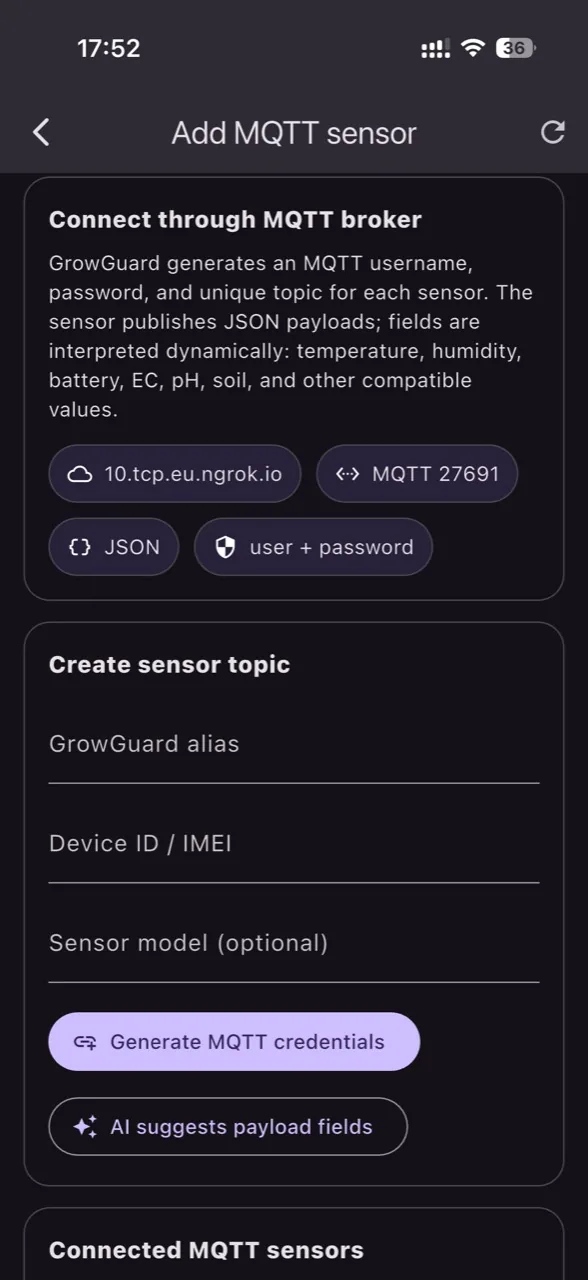
Whether data comes from TTN, MQTT, or NB-IoT, GrowGuard works to bring readings into the same operational structure.
AI proposes clear metric keys and can expose confidence when a payload is ambiguous.
A mapping becomes active only after the user confirms it, preventing a wrong field from automatically entering the dashboard.
Stable decoders and flows remain the foundation. AI is especially useful for onboarding and new or unusual JSON payloads.
The sensor sends a JSON payload through TTN, MQTT, NB-IoT, or a compatible flow.
GrowGuard identifies possible fields for visible metrics: temperature, humidity, battery, EC, pH, or soil readings.
The user confirms the good mapping and ignores metadata, id, timestamp, or counter fields.
Use GrowGuard for IoT onboarding and controlled mapping of sensor readings.
No. AI only proposes how fields should be read; values come from the payload, and existing decoders remain prioritized.
Metadata fields are ignored when they do not represent a user-visible measurement.