Late spring frosts, calm nights with thermal inversion, and summer heatwaves are two sides of the same problem: microclimate shifts quickly, and interventions must start on time and stop on time. In practice, the difference between a “borderline” night and a damaging night can be a few tenths of a degree or a few minutes—especially in variable terrain, near shelterbelts, in valleys, or in greenhouses/tunnels with uneven ventilation.
A good workflow is not just “having sensors”. It is turning data into repeatable decisions: knowing what you measure, why it matters, what thresholds each zone needs, who gets the alert, what intervention is applied, and how you verify afterward whether it worked. GrowGuard helps you connect live monitoring, a sensor map, forecast with context, alerts, reports, and team access—including integration options for LoRaWAN, NB-IoT, MQTT, and TTN API imports—so you can run one unified playbook across greenhouse/tunnel, orchard, and vineyard.
Below is a practical workflow designed for owners and managers, and also for sensor distributors who need to deliver a clear operating model to customers: preseason setup, zone-based monitoring and alerting, frost and heat routines, then post-event verification and continuous improvement. It does not offer guarantees, but it improves decision discipline and reduces surprises.
1) From forecast to decision: why “context” matters for frost and heat
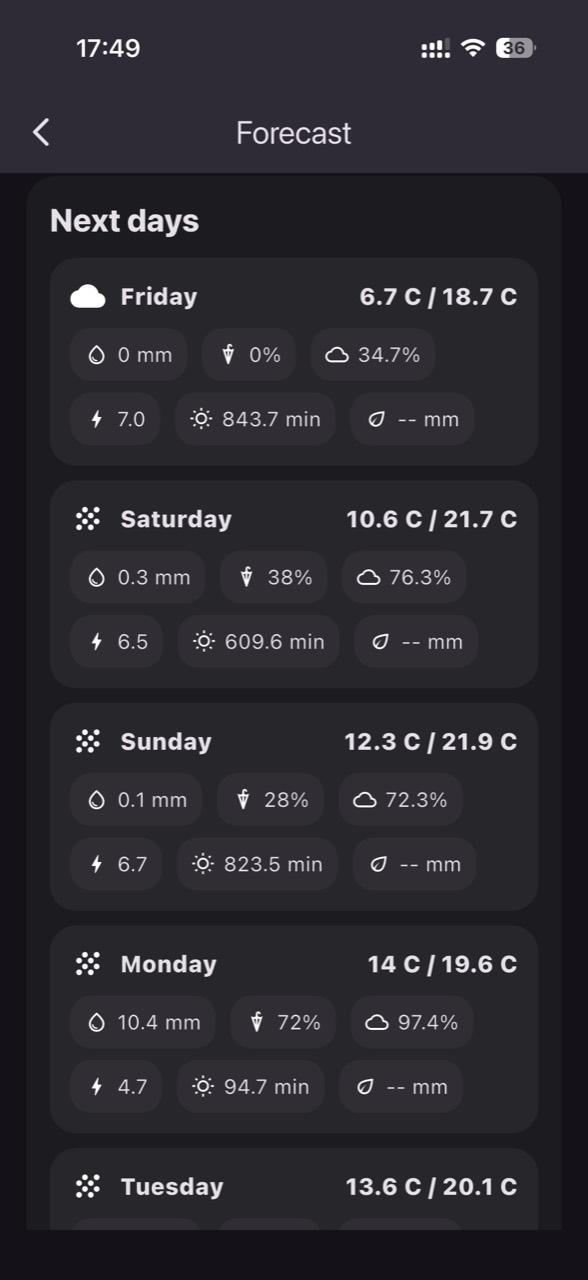
A generic weather forecast is a starting point, not a verdict. In horticulture, where the crop sits matters: a low pocket, a ridge, a block near woodland, a tunnel with cold ends, a vineyard on a slope. That is why, in GrowGuard, it helps to treat forecast as a “risk signal” that must be calibrated with real on-site data.
For frost, the difference between advection (cold air mass, wind, broadly uniform low temperatures) and inversion (cold air pooling near the ground, warmer layer above, calm conditions) completely changes the tactics. For heat, it matters whether you face high temperature plus low humidity (high VPD) or high temperature plus high humidity (different physiological stress and possible condensation dynamics later).
Decision-making should therefore combine: forecast (trend and likelihood), the zone’s microclimate history, and live sensor readings (temperature, humidity, VPD, soil moisture, optionally EC/pH in fertigation), plus equipment health (battery, sensor status, connectivity). GrowGuard makes these elements visible in one place so you are not relying on a single source.
2) What to measure and where: the minimum sensor set for greenhouse/tunnel, orchard, and vineyard
A robust workflow starts with a minimum set of measurements and placement that captures zone differences. For frost and heat, the most useful are: air temperature, relative humidity, calculated VPD, temperature at canopy level (as close as practical to buds/flowers/inflorescences), sometimes temperatures at 2 m vs 0.5–1 m to detect stratification, plus soil moisture (for irrigation decisions) and, in fertigation systems, EC and pH. GrowGuard can aggregate these data from devices connected via LoRaWAN or NB-IoT and can ingest existing streams via MQTT or TTN API imports—especially helpful when infrastructure is already in place.
In greenhouse/tunnel: you typically need at least two measurement zones—one in the core and one in a “cold end” (doors, corners, near film/glass)—plus an outdoor reference. If you have thermal screens, curtains, or compartments, each compartment effectively becomes a separate zone. For heat, canopy-level temperature and VPD are key for deciding ventilation, shading, fogging, and irrigation.
In orchard: terrain differences can create large nighttime spreads. It helps to place sensors in low spots (cold sinks), mid-slope, and higher ground. If you use overhead sprinklers for frost protection, follow canopy/bud-level temperature and humidity, and track soil moisture (and sometimes soil temperature) to confirm you have the water reserves for a long run. For heat, temperature, VPD, and soil moisture show when stress becomes critical and when to adjust irrigation and protection (nets, reflective materials, canopy management).
3) Zoning in GrowGuard: from “one station” to microclimate-specific alert thresholds
One of the most common reasons for false alarms or missed alarms is using a single threshold for the entire farm. In reality, each microclimate cools/heats at different rates and has different operational thresholds (especially if equipment differs by block). In GrowGuard, you start from the sensor map and define logical zones such as “Tunnel A north end”, “Tunnel A center”, “Orchard low pocket”, “Orchard plateau”, “Vineyard east-facing slope”.
For each zone, you set distinct alert thresholds: for frost, a pre-alert (when you start preparing) and an action threshold (when you start interventions). For heat, you can define thresholds for maximum temperature and for VPD (when the air becomes too “dry” for safe transpiration without stress).
Thresholds should be operational, not only biological. For example, if greenhouse heating has inertia and needs 20–30 minutes to stabilize, the action threshold should be set higher than the temperature at which damage would begin. Similarly, if natural ventilation responds slowly in a long tunnel, the ventilation start threshold may need to trigger before the peak. GrowGuard supports zone-based thresholds and targeted alerts to the team members who can actually act.
4) Recommended (indicative) thresholds and how to adapt them to crop and phenology
There is no single “correct” threshold for all crops and phenological stages. In orchards and vineyards, frost sensitivity differs greatly between dormancy, bud swell, green tip, bloom, and fruit set. In protected crops, tolerance to heat depends on species, crop load, shading, and irrigation capacity.
Instead of chasing a universal number, use a stepped threshold approach: (1) pre-alert based on forecast and the observed rate of change, (2) action alert as you approach the risk zone, and (3) critical alert when any delay materially increases risk. In GrowGuard, you can watch live trends and history to refine thresholds after two or three events.
For frost in orchards/vineyards, track not only the minimum but also the cooling rate and duration below threshold. For heat in greenhouses, track temperature plus humidity (VPD) and time above threshold. In parallel, monitor soil moisture so water stress does not amplify heat stress. In fertigation, EC and pH can flag salinity or uptake constraints during high transpiration periods.
5) Frost workflow: preparation, trigger, control, shutdown
A reliable frost workflow has four phases. Phase 1: preparation (24–48 hours ahead). In GrowGuard, review the forecast and check zones: where do you historically see the lowest minima? Verify sensor health (battery, connectivity, plausible values) and make sure team access and notifications are set correctly. Confirm fuel availability, water supply for sprinklers, curtain/screen positions, and the readiness of fans, heaters, or pumps.
Phase 2: triggering (2–4 hours before the minimum). Do not wait until you “hit” 0°C on a sensor if you know equipment has inertia. Use zone-based thresholds: a low pocket might trigger earlier than a higher block. If inversion risk is present, multi-height sensors help you detect stratification and decide whether wind machines/fans are likely to help. In GrowGuard, the sensor map quickly shows which zones are dropping fastest.
Phase 3: control during the event. The goal is keeping the crop above the operational threshold without large oscillations. In tunnels, combine closure, thermal screens, heating, air circulation, and infiltration reduction. In orchards/vineyards: overhead sprinkler frost protection (if available), mobile heaters, permitted and safe smoke/thermal measures where applicable, and inversion mixing with fans. Monitor zone temperature and humidity live in GrowGuard and check whether the intervention “catches” within 15–30 minutes. If it does not, increase intensity or activate redundancy. If you have MQTT-based integration for automation, the data can feed farm control logic; even without automation, alerts keep you in the loop.
6) Heatwave workflow: prevention, cooling, hydration, physiological protection
In heatwaves, the typical mistake is reacting after the peak arrives. A good workflow starts in the morning, when you can still “prepare” the plant and microclimate. In GrowGuard, begin with forecast plus zone history: which houses overheat, which orchard rows have west exposure, which vineyard blocks repeatedly run into water stress.
In greenhouse/tunnel: useful thresholds include temperature (alert level) and VPD (to avoid excessively dry air). Intervention routines can include: ventilation (side/roof openings), shading (nets, whitewash, screens), air circulation, evaporative cooling/fogging where appropriate, and irrigation schedule adjustments to avoid stress spikes (without waterlogging). Humidity and VPD monitoring matters: you can lower temperature but push humidity too high, increasing later condensation risk. GrowGuard shows these trade-offs in real time.
In orchards and vineyards: heat management combines irrigation (based on soil moisture and evaporative demand suggested by VPD), physical protections (shade nets where installed), canopy management (avoiding aggressive leaf removal before heat), and sunburn mitigation (for example reflective materials, in line with local practice). There is no single recipe, but zone thresholds help you prioritize: blocks with high VPD and dry soil are the first to need action.
7) Post-event verification: what to report, what you learn, what you change
After frost or heat events, the value of data shows up in post-event analysis. In GrowGuard, use reports and zone history to answer simple questions: When did rapid cooling/heating start? When did intervention start? How long were thresholds exceeded? Which zones responded well and which lagged? Was there an equipment issue or an operational issue?
For frost, verify whether temperature stayed below the action threshold and for how long. If you use sprinklers, look for stable temperatures around the freezing point and humidity patterns consistent with continuous operation. If you heat a tunnel, check how quickly temperature rose after start and whether certain zones kept losing heat (possible leaks or uneven screens).
For heat, analyze temperature and VPD peaks and correlate them with soil moisture (did you enter water stress?) and ventilation/shading decisions. Importantly, if alerts fired but action was delayed, the root cause may be process (responsibility), not technology. Use team access to clarify roles: who receives pre-alert, who receives critical alert, and who confirms interventions.
8) Smart alerts and data hygiene: battery, sensor status, calibration, continuity
Alerts are only as good as the data. A practical workflow includes data hygiene: periodic checks of sensor status, battery, signal quality, and abnormal readings. GrowGuard surfaces battery and sensor status so you do not discover—on a frost night—that a key point is not reporting.
Set internal rules: if a sensor stops reporting within the expected interval, who investigates? Do you have redundancy in critical zones (for example two sensors in the cold pocket)? For temperature and humidity, ensure proper shielding and placement (avoid direct radiation and contact with surfaces that heat the sensor).
If you use LoRaWAN/NB-IoT or MQTT streams, periodically verify data consistency and transmission timing. For TTN API imports, confirm channel mapping is correct and watch for firmware changes that may alter units. This discipline reduces false alarms and increases team trust in the system.
9) The phytosanitary connection: how heat and frost shift risk windows and what GrowGuard can flag
While this article focuses on frost and heat, extreme events also influence phytosanitary risk. After heat followed by humid nights, some diseases can find favorable windows; after frost, stressed tissue can become more susceptible. It helps to keep microclimate and crop-health context in the same platform.
GrowGuard can provide AI-assisted phytosanitary alerts based on environmental conditions and history as decision support. It does not replace scouting and agronomic recommendations, but it can draw attention when the temperature–humidity–duration combination creates a risk window.
Additionally, AI Plant ID can be useful for mixed teams (farms with seasonal labor or distributors doing field support) for fast identification of plants or visible symptoms as a starting point for verification. The key is linking these tools to the post-event routine: after frost/heat, intensify scouting in zones that exceeded thresholds.
10) Operational checklist (summary): what to do before, during, and after
Before (24–48 h): review forecast; confirm critical zones on the sensor map; check sensor status and battery; validate zone thresholds and notification lists; prepare resources (water, fuel, equipment).
During: track zone live monitoring; respond to pre-alert per plan; start interventions at the operational threshold (not the “theoretical minimum”); verify within 15–30 minutes that temperature/VPD stabilizes; communicate within the team who acted and where.
After: generate interval reports; compare zones; record start/stop times and effectiveness; adjust thresholds and routines; scout the crop in blocks that exceeded thresholds. Keep the same logic for greenhouse/tunnel, orchard, and vineyard—changing only the crop-specific interventions.
Conclusion
Frost and heatwave protection becomes far more manageable when you treat it as a repeatable process rather than last-minute reaction. Forecast tells you “risk is coming”, while sensors tell you “where and how fast it is happening”. Zone-based thresholds add discipline, and intervention routines reduce delays and oscillations.
GrowGuard is valuable precisely at this junction between data and action: live monitoring, sensor map, forecast, alerts, reports, team access, and integration via LoRaWAN/NB-IoT/MQTT/TTN API, alongside indicators like VPD, soil moisture, EC/pH, and device status. With post-event verification and continuous refinement, you build an operational system that holds up better against microclimate variability across greenhouse/tunnel, orchard, and vineyard.